The problem
The alarm was already installed when we moved in. There were wireless sensors on the doors and windows, and all of them still worked. The control panel had been locked by the dealer that installed it, and that dealer had since gone bankrupt, so there was nobody who could unlock the panel.
The usual solution is to replace the whole system with a new panel and new sensors on a monthly monitoring contract. I did not want to discard working sensors or take on a contract.
What I did
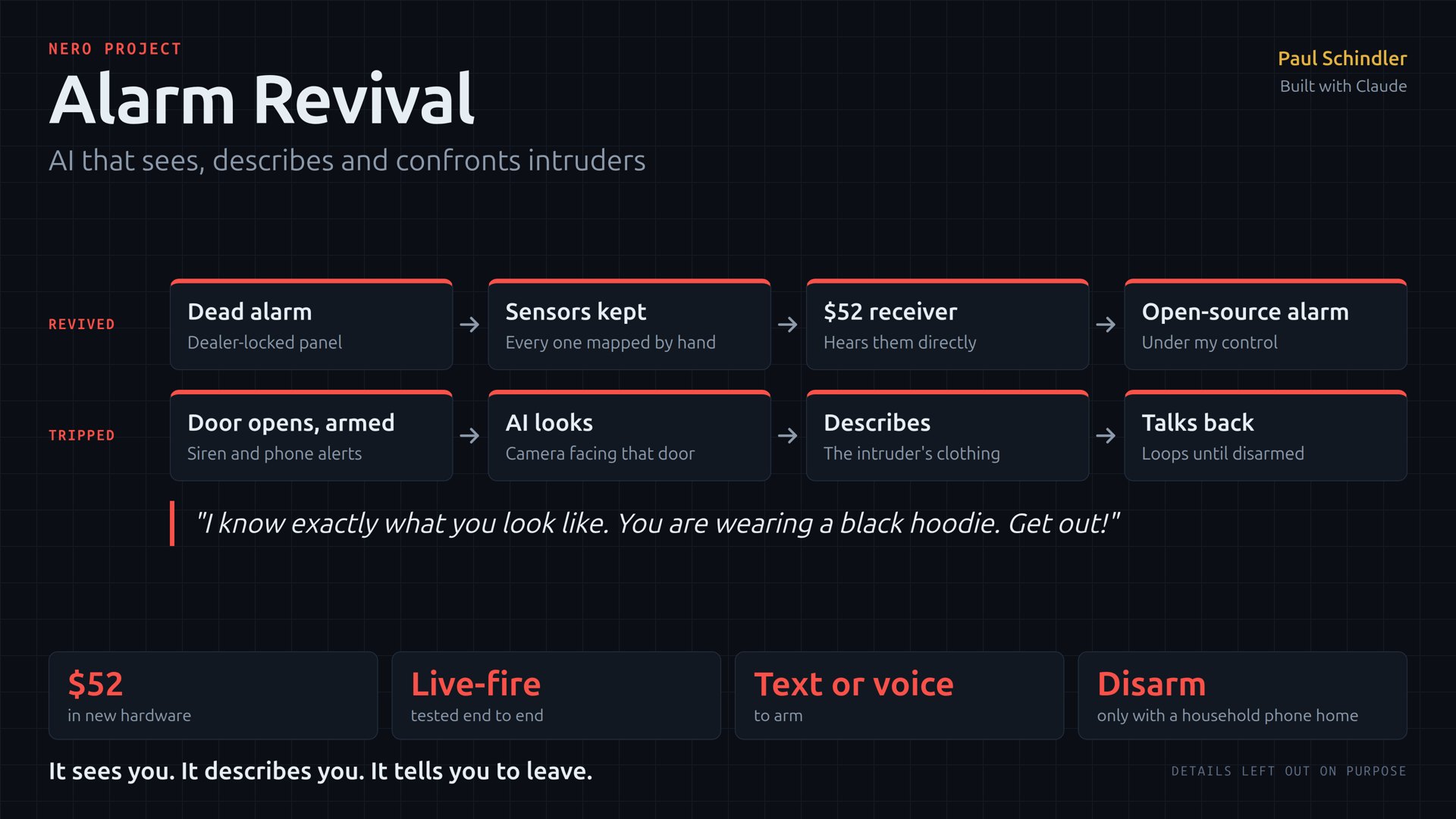
The sensors were still transmitting, so the missing piece was something to receive them. I bought a $52 software-defined radio, which now receives the sensors' signals directly. Software converts each signal into a readable event, such as a door opening. Open-source alarm software that runs on our own server then decides whether the event is a breach, and if it is, the software sounds the siren and sends alerts to our phones.
The system has no dealer and no subscription, and it does not depend on a company's servers to work.
Testing
I consider a change finished when I have seen the result, so I tested the alarm by setting it off. I armed the house, opened a door, heard the siren and confirmed that both phones received the alert.
That first test found two faults that I had missed when I reviewed the configuration. I had both corrected and repeated the test before putting the alarm into service.
When it trips
When the alarm trips, an AI vision model looks at the camera facing the opened door and describes the intruder's clothing. A deep, processed voice then tells the intruder over the siren what they are wearing and to get out. It repeats until one of us disarms.
Who can disarm it
Nero's always-on assistant can arm the house when one of us asks. It never disarms the alarm on its own judgment. It disarms only when one of us asks, and separate code decides whether the request is allowed. Disarming by voice works only when that code confirms a household phone is home.
I have left product names, sensor details and timings out of this account.
"Men's ears are less apt of belief than their eyes."
PreviousAn adversarial review of Nero's rulesNextPresence-Aware Home